.svg)
Archive < Local & Global < Sparking a Dialogue <
On Edgelanding
Title: On Edgelanding
Author(s): Flávia Lozano
Year: 2026
City: Global Community
Language(s): English
Photo: Mateus Guzzo
For five years, a group of people from different corners of the world has been doing something hard to explain: identifying, elaborating, discussing, breaking apart and building up again the conversations about surveillance, technology and the social contract.
If it sounds like a very specific bunch, it’s because it is. The Edgelands people are all kinds of people, but they share one important common trait: curiosity.
Photo: Mateus Guzzo
In May 2026, that curiosity finally had a room to fill. “Temporary Spaces, Lasting Conversations” brought the network together for two full days and showcased the array of methods and languages in which a conversation can happen. From dance to photography to digital networks, each contribution made it clear that bringing different ways of thinking together only improves the discussion.
Photo: Mateus Guzzo
Yael Martínez shared his attentive photographic documentation of the Houston public education system and the people working to change it, and Caty Enders complemented the conversation by speaking about the effects of digitalized social life on children and teenagers.
Eva Yampolsky and Alexandre Bovey took us on a journey through the archive of the future, while Sara Arango and Dario Rodighiero mapped the Edgelands network onto an interactive tool; both projects created living visualizations of the community and the production of the past years.
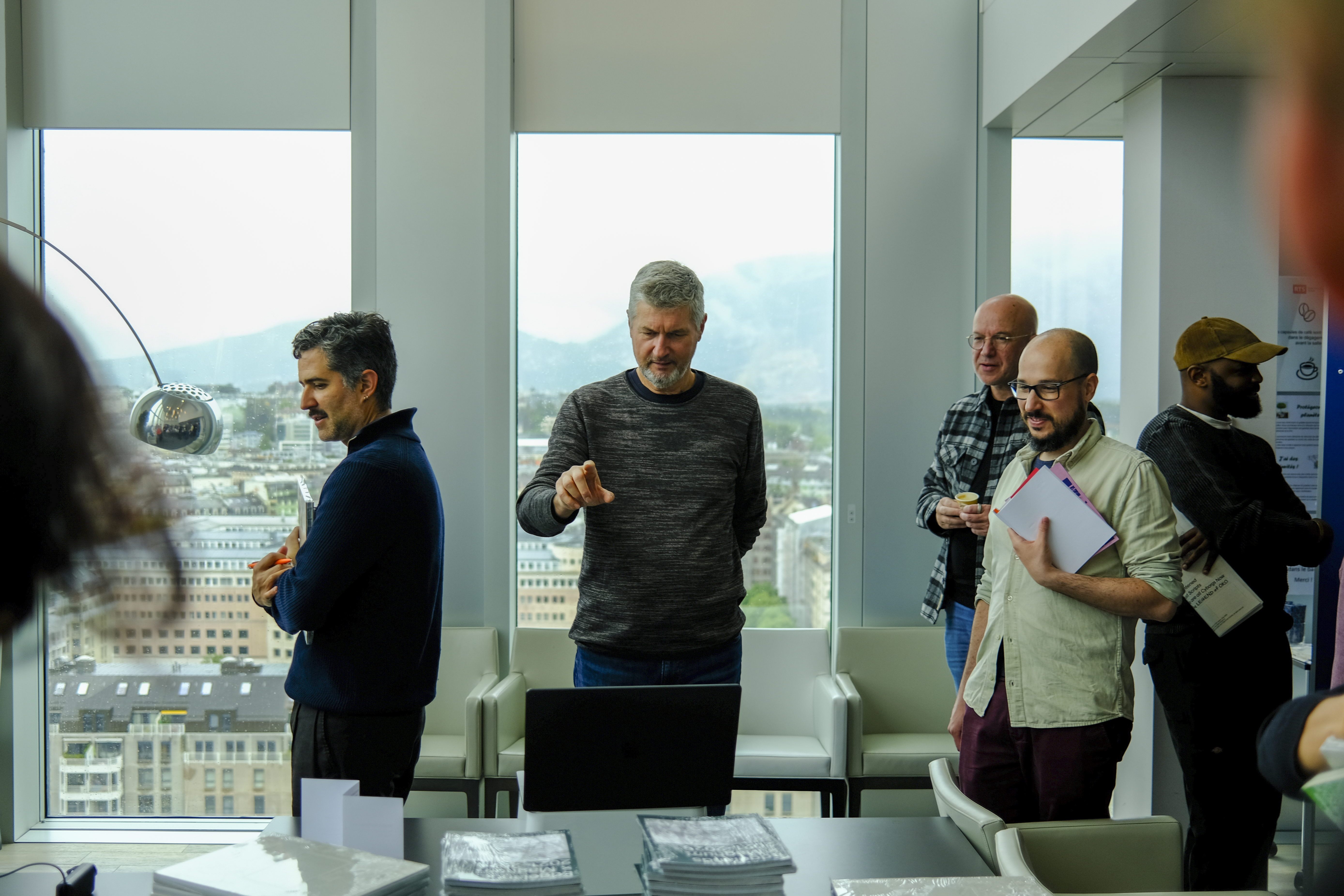
Photo: Mateus Guzzo
Together, we watched a sci-fi film that offered yet another lens through which to experience how digitalization is reshaping the social contract and the risks that come with it, while Omid Milani brought us back to a very fundamental technology —words— and the way in which they dictate how we relate to each other and build communities and technologies.
Laura García wove a narrative thread through all of these apparently independent contributions, helping us understand how art and research can work together, and opening space for emotion, discussion and everlasting memories. Betsy Campbell closed the programme with an algo workshop—an actual choreography for expressing how we feel about artificial intelligence, connecting the dots with the intelligence of our bodies.
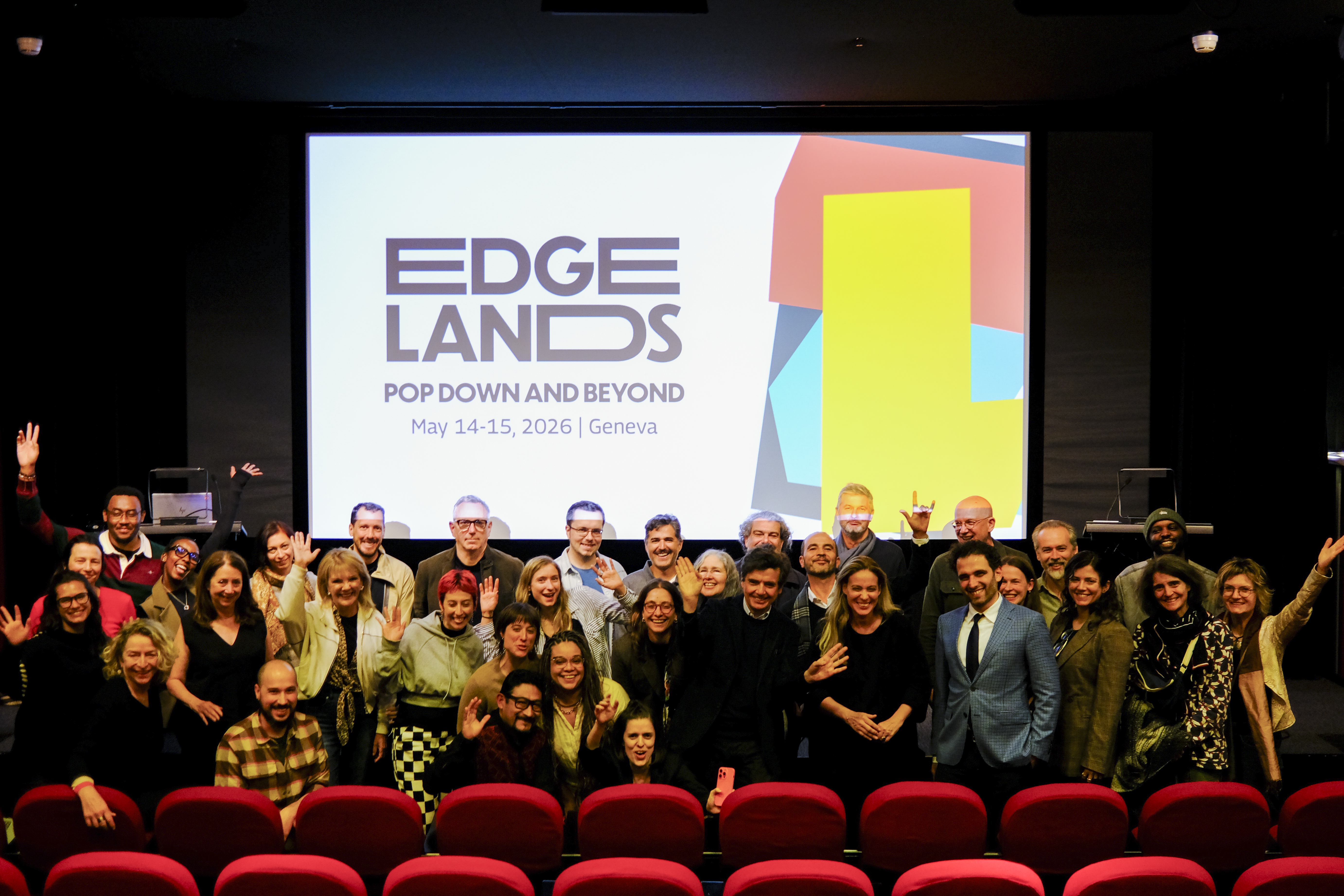
Photo: Mateus Guzzo
What connected all of it was the Edgelands method: the belief that experiencing and moving through knowledge changes your relationship to it and that an algo dance might sometimes make more sense than an academic abstract. The fundamental belief that friction between disciplines, cities and people is not a problem to be solved, but a resource to be used.
From the beginning, the point of Edgelands was to create bridges between cities, art, research and dialogue. And the method worked. Bringing the community into a single room, and then out into a vineyard overseeing double rainbows over an alpine lake (yes, really), confirmed what we had suspected all along: that we are better as a group, and that it is worth keeping insisting on finding the bridges and building new paths.
Photo: Mateus Guzzo
I hope you are carrying your tote bags around the world, spreading the learnings of this (not so) little group of cool people who truly believe that the world can be co-created. Keep filling them up with more ideas, and lend them to the next groups.
And keep Edgelanding!
See you soon.