.svg)
Archive < Roadmaps for the Future <
The Edgelands Institute Archive
Title: The Edgelands Institute Archive
Author(s): Eva Yampolsky
Year: 2026
City: Geneva
Language(s): English
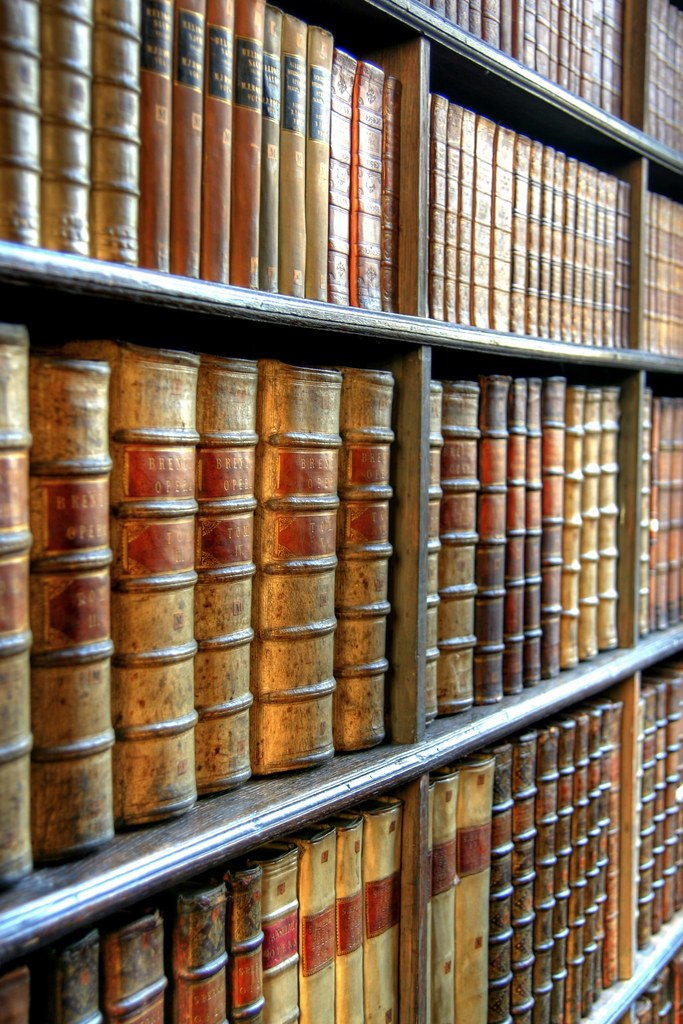
"St John's College Old Library - Books" by ben.gallagher is licensed under CC BY 2.0
Over the past five years, the various programs and projects initiated by the Edgelands Institute have served as a dynamic platform for expression, experimentation and creation. These experiences of collaboration – between researchers, artists, policymakers and ordinary citizens – have resulted in a wide range of documents, including publications, reports, videos, artwork, podcasts, discussion forums, blogposts and books. With its pop-down phase in sight, the Institute decided to create a public archive of all the documentation that it and its network have produced throughout its existence.
The archiving project is a collaborative effort by Yves Daccord, Laura García Vargas, Alexandre Bovey, Flávia Lozano, Mateus Guzzo and Eva Yampolsky. It started as a series of reflections and back-and-forth discussions about the nature of the archive itself.
- What purpose would it serve?
- Who would benefit from it?
- Should every document be archived or rather should a selection be made as a showcase of the Institute’s various projects?
- Should this archive be temporary, in the pop-up image of the Edgelands Institute, or should it be permanent?
Our discussions around these important questions have led us to adopt a hybrid approach to archiving. It is classical in the sense that it systematically documents all items within the Edgelands fonds, providing key descriptions and information. At the same time, it has the ambition of inspiring new action, of serving as a model for future structures based on the pop-up methodology and its primary benefits for social, artistic and academic institutions. It therefore focuses more on the collaborative and creative process, than simply on the outcomes.
What is an archive and why do we create archives in the first place? An archive is a collection of documents, objects, traces of past events or experiences, gathered and organized in one specific place. It comes from the Greek term arkhè (the beginning, the principle), a principle of organization creating a new beginning in history, and from arkheion, a fixed determined location. One might first think of national archives or institutional archives, which like a museum provide the highest level of conservation, or protection from deterioration or misuse. Access to the documents in these archival institutions is not always easy to obtain and is often reserved to specialists, such as professional historians. As retrospective collections, these archives safeguard unique documents and objects, which help us to understand not only our past, but also our present, and they give us ways to construct a future.
An accumulation of documents on its own does not constitute an archive; it must be organized following a specific structure, which depends on the objectives of the archiving entity or institution. In addition, not all documents relating to a certain context find their way into the archive. Most importantly, archives are materials for future use, documents that take on new meaning throughout time and which help us not only to rediscover the past but also to inscribe past experiences into new present and future contexts. This last point is at the heart of French philosopher Jacques Derrida’s book Mal d’archive (1995)/Archive Fever (1996): “the question of the archive, he writes, is not a question of the past […] but rather a question of the future”.
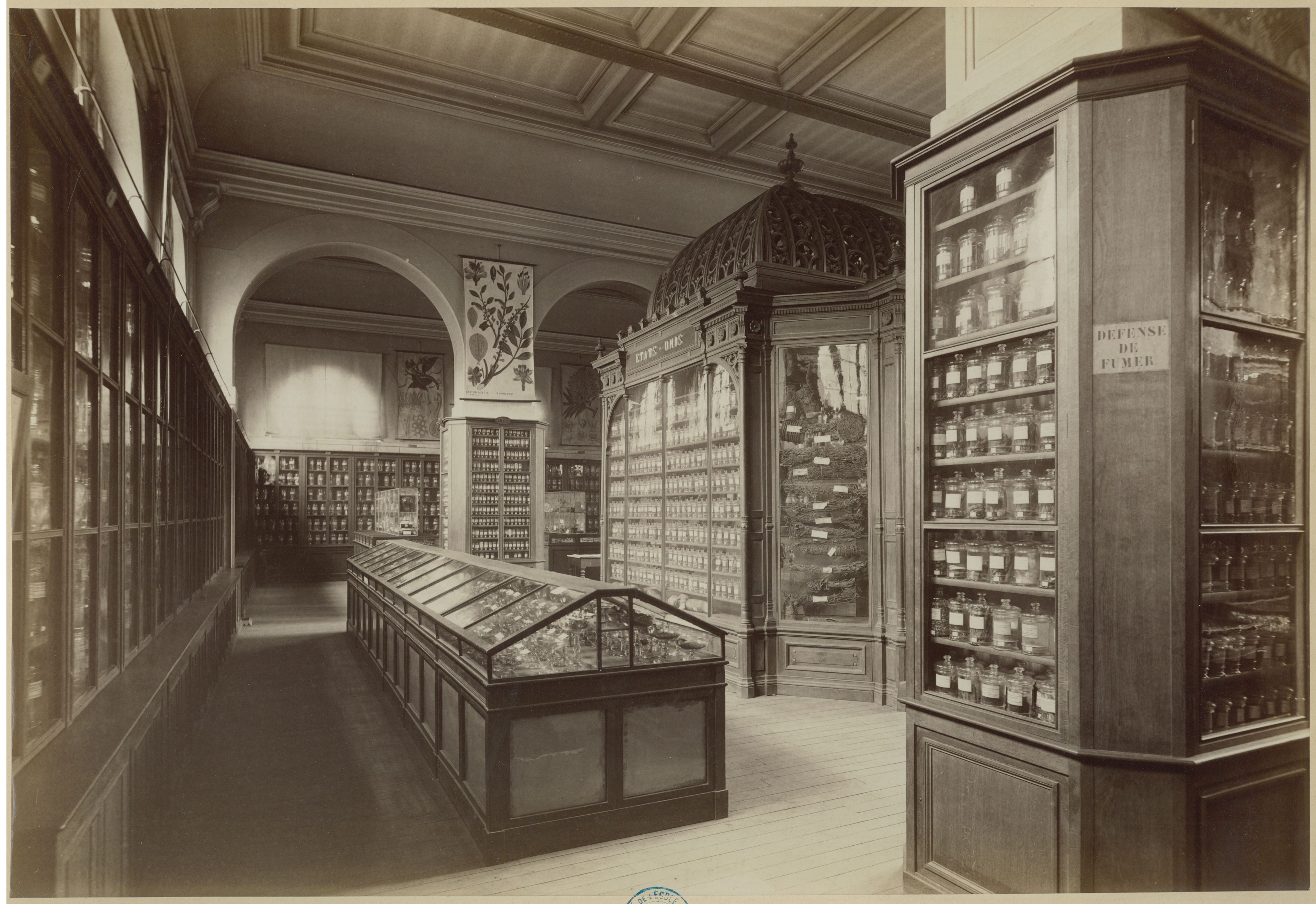
École supérieure de pharmacie de Paris. Collection de matière médicale. [Faculté de pharmacie de Paris], 1900. BIU Santé Pharmacie. https://www.biusante.parisdescartes.fr/histmed/image?impharma_dos316bisx005
However, imposing institutions like the national archives are not the only places where we can find archives. There are small institutional archives, business archives, family or personal archives, among others. In fact, there are so many archives in the world that it would be difficult, perhaps even impossible to count them all.
Manifestly, at least in modernity, we like to archive the things we create, and to preserve and revisit them. The contents and their uses are just as diverse. We collect artwork and other cultural production, administrative (personal, regional, national, international) and criminological documents, but also tools and other everyday objects in museums of ethnography, taxidermy mounts of animals in zoological and natural history collections, wax molds of dermatological diseases, even human brains, for instance at the University of Denmark, just to name a few examples. Archiving events as they unfold – by publications such as the Journal of Palestine Studies – also play a crucial role in constructing a collective narrative, in strengthening a specific group, culture or people, and in guaranteeing its memory in the future. For the past several decades, there has also been increasing interest in “minor” archives, including “ordinary” and autobiographical texts, medical reports, doodled images, and even graffiti. Whatever the contents of an archive, these are all traces, memories or recordings of the past, and which acquire particular value and meaning when we revisit them in the future as part of organized, indexed and inventoried collections.
Following these reflections on different types and functions of archives, we searched for a way to create an archive that is not only retrospective, or a reference to past activities, but also prospective, a tool for observing and acting on the future. This question of agency was particularly important given the pop-up nature of the Edgelands Institute. This led to reflections on the most dynamic ways to organize the wide range and types of documents. Should they be classified by medium, by city, by project?
Ultimately, we opted for a cross-cutting approach, whereby each series and subseries represents various qualities relating to the pop-up methodology. Each document is a reflection of this methodology put into action, of different kinds of collaboration on a local and international level, and the ways in which different types of stakeholders (local community members, experts, artists) can create a common language around important contemporary issues. In other words, this archive has a double function: it provides access to nearly all of the Institute’s documentary production over the years focused on the primary issue at stake (digital security and the social contract), while serving as a useful tool or a model for future pop-up structures.
Another important question during the conceptualization process was to find an archiving approach that would represent the temporary and sometimes even ephemeral aspects of the Institute and some of its activities. How do you archive an event that took place at a specific moment in time and that did not result in the production of a document (video, artwork, text)? Inspired by books and previous research on archiving performance art and happenings, we built on the idea that all events and experiences leave a trace (material or immaterial), and these traces can fuel future action.
It was thus important to incorporate into the archive structure this aspect of the immaterial, of the ephemeral, that which leaves an impact nonetheless and has an influence, even if that influence is not immediately apparent. These ephemeral events are thus incorporated into the archive as a collection, as references to experiences, but they are also represented by the network of the numerous actors who have worked together throughout the Edgelands Institute experience. The website hosting the Archive also hosts the Edgelands Network, developed by Sara Arango Franco, making it possible to visualize these interconnections by different categories and to develop future collaborative projects.
Once the structure was developed and given that the entirety of the collection is digital, the next step was to actually create the archive website itself. In collaboration with Flávia Lozano and Mateus Guzzo, and in regular back-and-forth discussions with Laura García Vargas and Eva Yampolsky, Alexandre Bovey then proceeded to develop a digital platform that is well presented and user-friendly. There are multiple ways of navigating the archive: by series relating to the Pop-up methodology, by category (author, date, city) or by keyword.
Given the international and multi-cultural aspect of the Edgelands Institute, most of the documents are in several languages (primarily English, Spanish and French), thus making them accessible to a large public. In all, there are more than 900 documents, which users are encouraged to not only discover but to reuse according to Creative Commons standards. Finally, it is our hope that all the dynamic work that has been done by the Edgelands Institute community over the past 5 years will inspire new projects and new action.